How Much Outdoor Time Do Children Really Need?
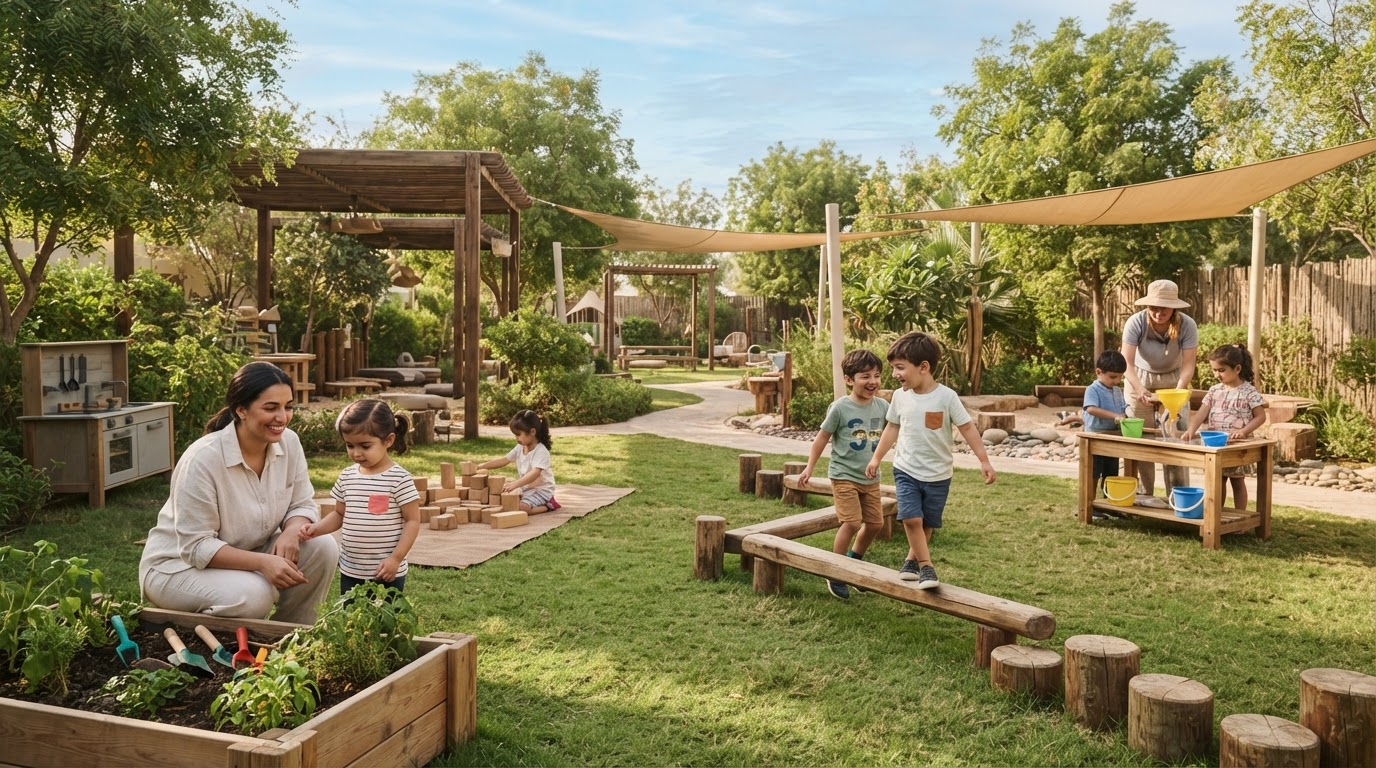
Why a little more time outside can make a big difference in the early years.
As the temperatures begin to cool across the UAE, families are finally finding their way back outdoors.
Mornings in the garden, afternoons at the park and weekends spent outside are becoming part of everyday life again. After months of planning activities around the heat, there's something refreshing about spending more time in the open air.
But beyond the fresh air and freedom to play, have you ever wondered how much outdoor time young children actually need?
The answer might surprise you.
So, How Much Outdoor Time Do Children Really Need?
According to the World Health Organization (WHO), children aged one to four should enjoy at least 180 minutes (three hours) of physical activity spread throughout the day.
For children aged three to four, at least 60 minutes of that activity should involve more energetic movement, such as running, jumping, climbing or active games.
For children aged one to two, the recommended 180 minutes can include movement at different levels of intensity.
Does That Mean Three Hours Outside Every Day?
Not exactly.
There's an important distinction between physical activity and outdoor time.
The WHO recommendations refer to movement throughout the day, not specifically to time spent outdoors. Dancing, climbing, balancing and active indoor play all count.
There isn't one universal number of outdoor hours that every young child must complete.
Instead, the focus should be on providing regular opportunities to move, explore and play, with outdoor experiences forming a valuable part of everyday life.
And the good news? These opportunities don't always need elaborate planning.
Source: World Health Organization — Physical Activity Guidelines
180 minutes
The WHO recommends at least three hours of physical activity throughout the day for children aged 1–4.
This refers to movement throughout the day — not three hours that must be spent outdoors.
Why Does Outdoor Play Matter So Much?
Outdoor environments offer children something different from indoor spaces.
More room to move, changing surroundings and opportunities to follow their own interests.
These everyday experiences can support several important areas of early childhood development.
Room to Move
Outside, children have space to run, climb, balance, stretch and test what their bodies can do.
Whether it's navigating a small climbing structure, balancing along a wooden beam or chasing friends across the grass, these experiences help build coordination, strength, balance and physical confidence.
For young children, movement isn't simply exercise. It's part of how they understand their bodies and the world around them.
Space for Curiosity
A fallen leaf. A puddle. A trail of ants disappearing into the soil.
What might seem ordinary to an adult can become an entire investigation for a young child.
Outdoor spaces offer constantly changing experiences, encouraging children to observe, ask questions, experiment and notice details they might otherwise miss.
These experiences also connect naturally with child-led learning, where children are encouraged to follow their own interests and become active participants in their learning.
For parents interested in this approach, exploring different early-years philosophies, including Montessori education, can offer useful insight into how nurseries support independent learning.
Opportunities to Connect
Outdoor play creates natural opportunities for children to build relationships.
From working together to build something in the sand to inventing their own games, children practise communication, cooperation, turn-taking and problem-solving.
These moments often happen without adults needing to direct every interaction.
A shared bucket, a disagreement over a toy or a game that requires teamwork can all become valuable social experiences.
Confidence and Independence
Outdoor environments allow children to make decisions, try unfamiliar activities and take manageable risks.
Climbing a little higher, balancing on a new surface or deciding how to build something can help children develop confidence and judgement.
With appropriate supervision and support, these small challenges become opportunities for children to develop independence and trust in their own abilities.
Does Outdoor Learning Always Need to Be Planned?
Not at all.
Some of the most meaningful outdoor experiences begin without a planned activity or a particular learning outcome in mind.
A child might spend several minutes watching a butterfly, collecting stones, watering plants or investigating how shadows change throughout the morning.
And these moments matter.
Sometimes, Simple Is Better
Outdoor learning doesn't need to involve expensive equipment or carefully organised activities.
It could be:
- Digging in soil and noticing different textures
- Collecting leaves and comparing their shapes
- Watering plants and watching them grow
- Building with sticks, stones or loose materials
- Watching birds and insects
- Playing with sand and water
- Running, balancing or climbing
- Sitting quietly and listening to outdoor sounds
These experiences encourage children to use their senses, experiment, communicate and build connections with their surroundings.
It's also why the quality of an outdoor environment shouldn't be judged by its size alone.
A smaller garden used thoughtfully can offer meaningful experiences, just as a large playground can.
What matters is how children are encouraged to engage with the space.
Making the Most of the Cooler Months in the UAE
Living in the UAE means that outdoor routines naturally change throughout the year.
During the hottest months, families and nurseries often need to adapt their schedules, using indoor environments or choosing limited outdoor periods when conditions are suitable.
But as October arrives and temperatures gradually begin to ease, the opportunity to spend more time outdoors starts to return.
A Good Time to Reintroduce Outdoor Routines
The cooler season offers a wonderful opportunity to make outdoor experiences a more regular part of the day.
And it doesn't need to mean planning an elaborate family outing every weekend.
A short morning walk, time at a neighbourhood park, watering plants on the balcony or an afternoon in the garden can all become part of a child's outdoor experience.
For families living in communities such as Dubai Hills, Jumeirah Village Circle, Al Barsha or Dubai Marina, nearby parks and community spaces can make it easier to include outdoor play in everyday routines.
The key is consistency, flexibility and choosing activities that suit the child's age, interests and the conditions outside.
Even during the cooler months, it's important to consider the temperature, sun exposure, hydration and available shade, particularly during warmer afternoons.
What Should Parents Look for in a Nursery?
When choosing a nursery, outdoor facilities can be an important part of the decision.
But rather than focusing only on the size of the playground or how impressive the garden looks in photographs, it's worth understanding how the nursery actually uses its outdoor spaces.
Questions Worth Asking During a Nursery Visit
How often do children spend time outdoors?
Is outdoor play part of the daily routine when the weather is suitable?
Is outdoor learning encouraged?
Are children able to investigate, build, move and participate in activities beyond scheduled playground breaks?
What experiences are available?
Look for opportunities involving nature, sensory materials, movement and open-ended play.
How is outdoor time adapted during summer?
Ask about shaded areas, hydration, supervision and how the nursery responds to warmer conditions.
Do children have opportunities to make choices?
A thoughtful outdoor environment should allow children to follow their interests within appropriate safety boundaries.
Look Beyond the Playground
An outdoor area doesn't need to be the biggest or most elaborate to be valuable.
What matters is how children use it, how teachers support their experiences and whether outdoor learning is treated as a meaningful part of the nursery day.
This is particularly useful to consider when comparing different early-years approaches.
For example, parents exploring nurseries following the EYFS curriculum may want to ask how outdoor experiences are incorporated into learning through play.
Whether you're looking at nurseries in Dubai, Abu Dhabi or a particular neighbourhood, visiting in person can help you understand what outdoor learning actually looks like.
How Can Parents Encourage More Outdoor Play at Home?
Making more room for outdoor experiences doesn't need to mean dramatically changing your family routine.
Small, consistent opportunities can be just as valuable.
Start With What You Already Have
If you have a garden, balcony or shared outdoor space, begin there.
Let children help water plants, observe the weather or play with safe natural materials under appropriate supervision.
If you live in an apartment, a neighbourhood walk or visit to a nearby park can offer plenty of opportunities to move and engage with the surroundings.
Follow Your Child's Interests
Not every child wants to run around a playground.
Some prefer collecting objects, watching insects, playing with water or simply spending time outside with a parent.
Allowing children to choose how they engage can make outdoor experiences more enjoyable and meaningful.
Make It Part of the Routine
Rather than treating outdoor play as something reserved for special outings, look for small opportunities throughout the week.
A morning walk before nursery, some time outside after collection or a weekend visit to the park can all contribute.
The goal isn't to fill every moment with activities.
It's to create space for children to experience the outdoors regularly.
A Little More Time Outside Can Go a Long Way
Childhood doesn't always need more structure, more planned activities or more entertainment.
Sometimes, children simply need more space.
Space to run, to wonder, to get a little muddy, to notice something new and to see what happens when they follow their interests.
And as the cooler months return to the UAE, perhaps it's the perfect reminder to make a little more room for the outdoors.
Not because every moment needs to become a learning experience, but because so much learning can happen naturally when children are given the opportunity to play.
Looking for a Nursery That Values Outdoor Play?
Choosing the right nursery means looking beyond the classroom and understanding the experiences your child will have throughout the day.
At The Nursery Directory, parents can find, compare and connect with nurseries based on their location, curriculum, facilities and family preferences.
Explore nurseries across Dubai and Abu Dhabi, browse our area-specific guides or book a nursery tour to see the environment for yourself.
Because finding the right nursery is about more than choosing a location. It's about finding a place where your child has the opportunity to learn, play and grow.
Frequently Asked Questions
Related Guides

Ready to explore nurseries?
Find the perfect environment for your child's early education. Compare curriculums, locations, and book tours directly.