What Does a Typical Nursery Day Really Look Like?
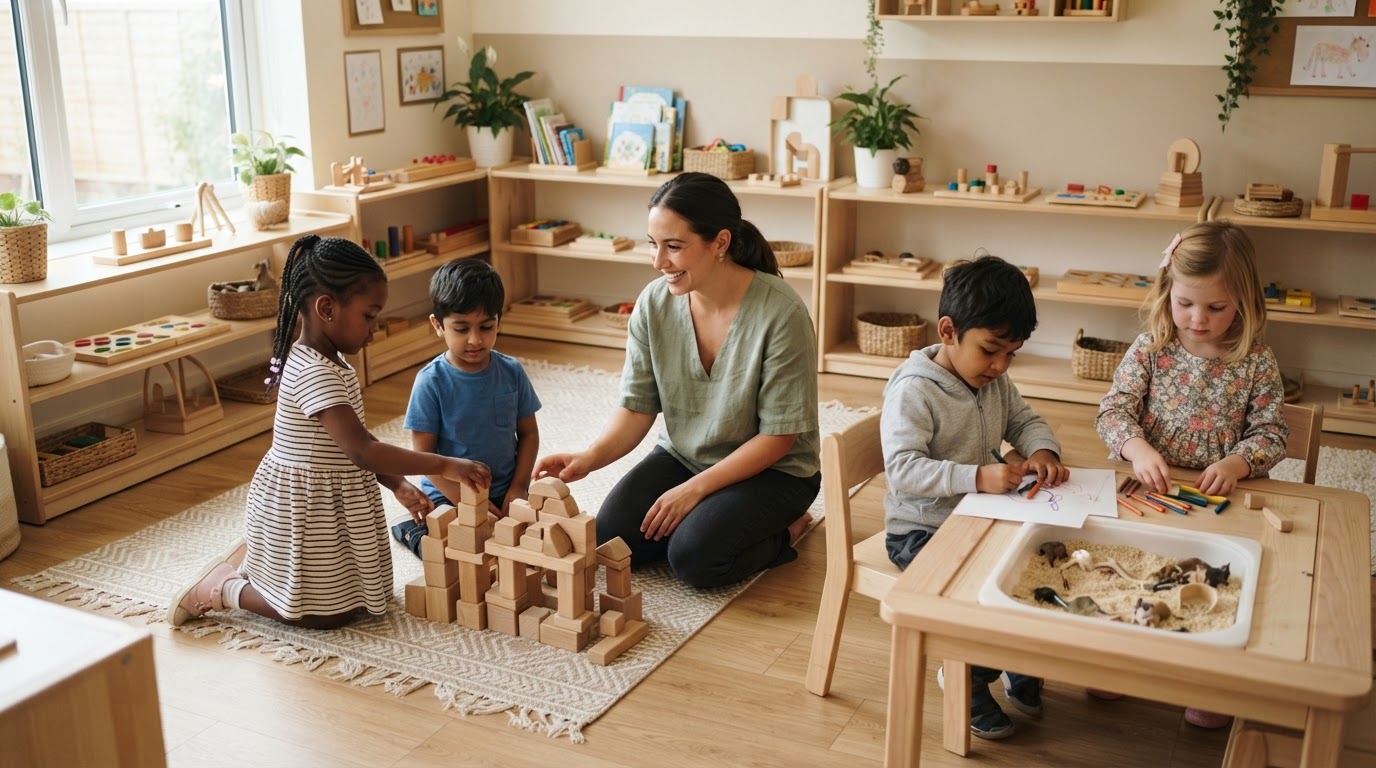
Beyond the timetable: exploring the little moments, meaningful experiences and everyday routines that shape a child's day at nursery.
If you're preparing to send your child to nursery, you may find yourself wondering what actually happens once you say goodbye at the door.
Do children spend the day playing? How much learning takes place? What happens between morning drop-off and home time?
While every nursery has its own approach, most early years environments bring together familiar routines, independent exploration, guided activities and opportunities for children to connect with others.
Let's take a closer look at what a typical nursery day really involves.
The Morning Welcome: Finding Their Feet
Every nursery day begins a little differently.
Some children arrive excited to see their friends, while others need a few extra moments of reassurance before joining the group.
Educators usually welcome children into a familiar environment, helping them settle through gentle conversations, favourite activities or simply spending a little time together.
These small daily interactions play an important role in helping children develop confidence, independence and a sense of belonging.
Over time, familiar faces and predictable routines can make morning transitions easier for both children and parents.
Free Play: More Than Just Playing
Walk into a nursery classroom and you might see children building towers, pretending to cook, exploring sensory materials or creating something colourful at an art table.
It may look like simple play, but there's often much more happening.
Through free play, children practise communication, solve problems, express ideas and learn how to interact with others.
Building a tower introduces early mathematical thinking. Playing in a pretend kitchen encourages imagination and social interaction. Painting offers opportunities to experiment with colours, textures and creativity.
Educators support these experiences by observing children's interests, asking questions and introducing opportunities to explore further.
For young children, play isn't separate from learning. It's one of the most natural ways learning happens.
Guided Activities: Learning Together
Alongside independent play, nursery routines often include activities thoughtfully planned by educators.
These might involve storytelling, singing, creative arts, movement games, early counting or exploring the natural world.
Rather than expecting young children to sit through long lessons, activities are typically designed around their developmental stages, attention spans and interests.
For nurseries following the Early Years Foundation Stage (EYFS), learning experiences support areas including communication and language, physical development, and personal, social and emotional development.
Other nursery approaches may organise activities differently, but the underlying focus remains on supporting children's growth through meaningful experiences.
The balance between independent discovery and adult-led learning helps children develop new skills while maintaining their natural curiosity.
Outdoor Experiences: Space to Explore
Outdoor play offers children a different kind of learning environment.
Whether they're climbing, balancing, gardening, playing in sand or discovering how water moves, these experiences encourage physical development, exploration and confidence.
Outdoor environments also create opportunities for teamwork, imaginative play and discovering the world around them.
Across the UAE, nurseries adapt their outdoor routines according to weather conditions. During warmer months, activities may move to shaded areas, take place earlier in the day or be replaced with indoor physical play.
When exploring a nursery, it's worth asking how outdoor experiences are incorporated throughout the year.
Snack Time and Lunch: Building Independence
Mealtimes are an important part of everyday nursery life.
Beyond eating, these moments introduce children to social routines, good hygiene and age-appropriate independence.
Simple activities such as washing hands, sitting together, opening a lunchbox or helping tidy up encourage responsibility and confidence.
Children also practise communication, learn about sharing space with others and gradually become more comfortable managing everyday tasks.
The routine may seem ordinary, but these experiences contribute to children's development in meaningful ways.
Rest and Quiet Moments: Time to Recharge
A day filled with new experiences can be tiring, particularly for younger children.
Depending on their age and individual needs, some children have scheduled naps while others enjoy quiet activities such as reading, puzzles or listening to stories.
Rest arrangements vary between nurseries, and not every child follows the same sleeping pattern.
A thoughtful nursery routine recognises the importance of giving children opportunities to recharge without expecting everyone to follow an identical schedule.
These quieter moments can help children feel comfortable before returning to their activities.
Home Time: Sharing the Day
As the day draws to a close, children prepare to return home.
Educators may share updates about meals, rest, activities and the little milestones that happened throughout the day.
Perhaps your child tried something new, made a friend or participated in a group activity with growing confidence.
Sometimes it's these seemingly small achievements that mean the most.
Regular communication helps parents stay connected to their child's experiences and understand how they're settling, learning and developing.
What Should Parents Look for During a Nursery Visit?
A nursery timetable can explain how the day is organised, but visiting in person provides a much clearer picture.
Notice how educators communicate with children, how the environment encourages exploration and whether children appear comfortable and engaged.
Rather than focusing only on facilities or the number of activities offered, consider how the nursery supports each child's individual needs.
You might want to ask:
- How much time do children spend in free play?
- How do educators support children who find drop-off difficult?
- What opportunities are available for outdoor experiences?
- How are nap times and individual routines managed?
- How do parents receive updates about their child's day?
The answers can help you understand whether a nursery's daily approach aligns with what you're looking for.
Every Nursery Day Tells a Different Story
No two nursery days are exactly alike, and that's part of what makes early childhood so special.
Some days are filled with new discoveries. Others bring small moments of independence, growing friendships or the confidence to try something unfamiliar.
The most important thing isn't how full a timetable looks, but how children are supported, encouraged and given the freedom to develop at their own pace.
At The Nursery Directory, we help families explore nurseries across the UAE, discover their educational approaches and facilities, and compare options with greater confidence.
Whether you're exploring nurseries in Dubai, nurseries in Abu Dhabi or options elsewhere in the UAE, finding the right environment begins with understanding what matters most to your child.
Find a Nursery That Feels Right for Your Child
Explore nurseries across the UAE, discover what makes each one unique, compare up to three options and arrange a visit with confidence.
Frequently Asked Questions
Related Guides


Ready to explore nurseries?
Find the perfect environment for your child's early education. Compare curriculums, locations, and book tours directly.